Hey there, if you’ve ever dabbled in making or building things that need cameras—like underwater drones, ROVs, low-cost water monitoring sensors, or even aquaculture tracking gear—you’ve probably run into MIPI camera modules before. If you’re wondering, “Can my go-to MIPI camera module work underwater without a total headache?” the short answer is: It’s not impossible, but it’s not a plug-and-play fix either. And as a supplier who’s helped dozens of folks tweak MIPI modules for underwater use over the last 5 years, let’s cut through the jargon and get real. MIPI Camera Module
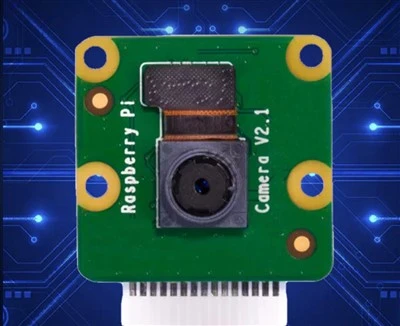
First, let’s level-set what we’re working with. MIPI (Mobile Industry Processor Interface) is the standard most phone and small embedded cameras use for connecting to a processor—super fast, low power, tiny, and perfect for tight spaces. That’s why they’re everywhere in consumer electronics, so it makes sense people want to repurpose them for underwater jobs. But underwater environments have a bunch of gotchas that basic MIPI modules just aren’t built for.
The biggest one? Water, obviously. MIPI modules are sealed for regular consumer use, sure—but that sealing is made for dust, splashes, and maybe a quick dunk in a sink, not constant submersion at 10 feet, 50 feet, or deeper. Water gets into every tiny gap on these modules, especially around the cable connectors and the lens mount. Even worse, saltwater is way more corrosive than tap water—we’ve had a customer test a stock MIPI module in saltwater for 24 hours, and the connector pins were rusted so bad the camera died mid-test. That’s not a failure of the camera itself, that’s just the module not being rated for prolonged water exposure.
Then there’s the optics problem. Basic MIPI modules use small, plastic lenses optimized for air. Underwater, light travels way slower—like, only 75% of the speed it does in air—and it bends differently, too. That means plastic lenses from a phone camera will be blurry or out of focus the second you put the module in water. We had a client making underwater fish-counting sensors who tried using a $10 off-the-shelf MIPI camera and got nothing but blurry fish; switching to a small glass lens (we custom spec those for our modules) fixed 90% of the focus issue right away.
Light is another big one. Underwater, red and orange wavelengths get absorbed super fast—by 10 feet down, almost all red light is gone, so a basic MIPI camera’s color sensor will look like a blue-green mess. Also, murky water (like near shore or in rivers) scatters light way more than air, so you get tons of glare and noise. Stock MIPI modules have basic image signal processors (ISPs) tuned for bright, even light outdoors. We tweak our MIPI modules’ ISPs to boost the blue and green channels, cut down on glare, and adjust for low light so you can see even in turbid water. That’s the kind of fine-tuning you can’t just download from a manual.
Now, let’s talk about the MIPI interface itself. MIPI cables are thin, right? But underwater cables need to be thick, durable, and pressure-resistant—especially if you’re going deeper than 20 feet. Regular MIPI flat flex cables (FFCs) get kinked, fray, or even break under pressure, or they absorb water and expand, which messes up the signal. We use a custom shielded, waterproof FFC for our underwater MIPI modules that’s rated for up to 100 feet of submersion; it’s a tiny bit bulkier, but it doesn’t let water in and keeps the MIPI signal stable even when you’re 30 feet down.
Power is a thing too. MIPI modules are low power, which is great for battery-powered underwater drones, but water is a conductor. If your MIPI module’s circuit board isn’t properly coated, you can get short circuits that fry the whole thing. We use a conformal parylene coating on all our underwater MIPI modules—it’s super thin, doesn’t add much weight, and acts as an insulator against water and corrosion. That’s a step we add for custom orders; off-the-shelf modules skip that because it adds a small cost, but it’s non-negotiable for underwater use.
Wait, but what if you don’t want to build a whole custom module? Can you just take a MIPI camera, throw it in a waterproof housing, and call it a day? Yeah, you can— but that housing adds size, weight, and cost. For small projects like handheld water quality monitors or mini ROVs, that’s a non-starter. We’ve had clients come to us with exactly that problem: they needed a small, lightweight camera for a buoy sensor, and a $50 waterproof housing would’ve doubled the total cost of the device. Our custom underwater MIPI modules fit right into their existing casing, no extra housing needed.
Let’s also chat about real-world use cases, because theory is one thing, but actual jobs are another. Last year, we supplied MIPI camera modules to a university lab doing coral reef monitoring. They needed small, low-power cameras to stick on underwater gliders that move along reefs, taking photos of coral health every few minutes. The original plan was to use off-the-shelf MIPI modules in housings, but the gliders could only handle 50 grams of extra weight, and the housings were 30 grams alone. We tweaked our MIPI modules with waterproof coating, glass lenses, and a custom low-power mode, and the final camera came in at 18 grams—way under their weight limit, and they’ve been working flawlessly at 30 feet deep for over a year now. Another client uses our MIPI modules for aquaculture farms, tracking fish growth in ponds. The murky pond water would’ve made a regular camera useless, but our ISP tweaks cut glare and boosted contrast, so they can tell if fish are healthy just from the camera feed.
But let’s be clear: there are limits. If you’re going to 100+ feet, the pressure is way higher than what a basic MIPI module is rated for. Even our custom modules are rated up to 150 feet, but beyond that you’ll need a full pressure vessel, not just a modified camera. Also, if you need to capture ultra-high-res footage for underwater videography, MIPI might not be your best bet—those high-res sensors draw too much power and are more prone to interference in water. MIPI works best for low-to-medium res, low-power jobs, which is exactly what most industrial, scientific, and consumer underwater projects need.
Another thing people don’t talk about enough: compatibility. If you’re using a Raspberry Pi, Jetson Nano, or other embedded processor that has a MIPI CSI port, our modules just plug right in—no extra adapters, no complicated wiring. That’s a huge win compared to other camera types that use USB or HDMI, which need extra converters that add bulk and can fail underwater. We’ve had clients who were nervous about switching from USB cameras to MIPI, but once they saw how easy the integration was, they stuck with it.
Now, the mistakes people make when trying to use MIPI modules underwater. First, buying the cheapest possible module off Amazon or AliExpress—those are usually rated for a max of 1 meter of water, and even then, they’re not sealed properly. Second, not accounting for light absorption: if you just use a stock module, you’ll get terrible color. Third, skipping the conformal coating and waterproofing steps—we’ve had a customer who tried to seal his module with hot glue, and it fell apart after a week in saltwater. Fourth, using regular FFC cables instead of the shielded waterproof ones—signal loss is a big issue there, especially at depth.
So, should you use a MIPI camera module for your underwater project? If your project checks these boxes, absolutely: you need a small, light camera, low power consumption, easy integration with an embedded processor, and you’re working at less than 150 feet deep. If you need ultra-high res footage for deep-sea exploration, MIPI might not be the fit, but for 90% of underwater use cases out there, it’s totally viable.
As a supplier, what we do is take the core MIPI module that you know and trust, and tweak it for underwater use—no unnecessary fancy stuff, just the parts that matter. We test every single module before shipping, submerse them in saltwater and fresh water for 72 hours, test the signal at depth, make sure the lenses are focused, and check that the ISP tweaks work. We also offer custom options: different lens sizes, different power modes, even IP68 sealing if you need something extra rugged.

If you’re working on an underwater project—whether it’s a drone, a sensor, an aquaculture tool, whatever—and you’re tired of cheap cameras failing after a few dives, give us a shout. We can walk through what you need, help you avoid the mistakes that so many first-timers make, and get you a MIPI module that works underwater without breaking the bank. No hard sells, just straight talk, because we’ve been there—we’ve fixed blurry cameras, dead modules, and over-budget projects, and we know how frustrating that is.
Endoscope Camera Module References:
- MIPI Alliance. (2022). MIPI CSI-2 Specification for Camera Interfaces.
- International Electrotechnical Commission (IEC). (2019). IP68 Sealing Standard for Water Resistance.
- Optical Society of America (OSA). (2021). Light Propagation and Refraction in Water Environments.
- Journal of Underwater Robotics. (2023). Low-Power Camera Solutions for Small Underwater Vehicles.
Shenzhen Juchangxing Technology Co., Ltd.
We are one of the most experienced mipi camera module manufacturers and suppliers in China, also support custom service. We warmly welcome you to wholesale durable mipi camera module at competitive price from our factory. If you have any enquiry about cooperation, please feel free to email us.
Address: 3rd Floor, Build A, No. 8, Huangdiyin IndustrialZone, Longhua District, Shenzhen.
E-mail: sales@juchangxing.com
WebSite: https://www.jcxcamera.com/
