Hey guys, if you’ve ever worked with aluminum tubes—whether you’re in manufacturing, automotive, plumbing, or even DIY projects—you’ve probably wondered at some point: “Just how much pressure can this thing handle?” As someone who’s been supplying aluminum tubes for over a decade, I get that question all the time, and it’s not a one-size-fits-all answer. That’s why today, I’m breaking this down like we’re geeking out over a coffee (no stuffy engineering jargon, promise) so you can actually apply this to whatever you’re working on. Let’s dive in. Aluminum Tube
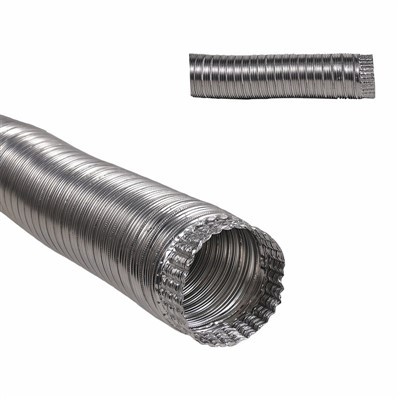
First off, let’s cut through the noise: the maximum pressure an aluminum tube can withstand doesn’t come out of thin air. It’s tied to a few key factors, and I see people mix these up all the time when they’re checking specs. Let’s start with the basics you probably already know, but let’s make it stick. The big one here is the alloy the tube is made from. Aluminum isn’t just one metal—it’s blended with other stuff like magnesium, silicon, or zinc to make it stronger or more flexible. For tubes that handle pressure (like hydraulic lines, pneumatic parts, or even fire extinguisher casings), we almost always stick to alloys like 6061 or 6063. Why? 6061 is the workhorse—great strength, easy to weld, and it can hold up way more pressure than, say, a basic 1000-series aluminum (that’s the super soft stuff used for foil or food containers). 6063 is a bit more formable, so we use it for things like frame tubes where you need to bend it without cracking, but its pressure rating is slightly lower than 6061. I tell new clients all the time: don’t ask for “aluminum tubes” without naming the alloy, because that’s half the battle.
Next up, tube dimensions. It’s not just how wide the outside is—its wall thickness matters way more. Think of it like a soda can vs. a metal fire extinguisher can: same basic metal, but the fire extinguisher has way thicker walls, so it can hold way more pressure. We calculate this using a formula, but I’ll keep it simple for you. The rough rule (we call it the Barlow formula, but we don’t mumble it to clients unless they ask) takes the outside diameter, wall thickness, and the metal’s tensile strength (that’s how much pulling force it can take before breaking) to get the burst pressure. For a common 6061 aluminum tube, if it’s a 1-inch outside diameter with a 0.065-inch wall (that’s a standard size we supply all the time), the burst pressure is around 1,800 psi. Wait, that’s not the working pressure, by the way—super important distinction. No one uses burst pressure as their “max safe” number, because stuff like temperature, corrosion, and even tiny scratches can knock that down fast.
Temperature is another big variable that people sleep on. Aluminum’s strength changes a lot with heat. If you’re using your tube in a hot engine bay (say, 200°F) or a factory with steam nearby, that 1,800 psi burst pressure I mentioned drops by about 10-15%. Go up to 500°F, and it’s down 30%—no joke. We had a client last year who used a standard 6061 tube for a hydraulic line on a construction crane that ran way hotter than he planned; he ended up with a line that blew at 1,200 psi instead of the rated 1,500, and that cost him a full day of downtime. I always remind folks: tell me what temp your tube will be in, not just what pressure it needs to hold, so we size it right.
Corrosion too—if your tube is going outside, near saltwater, or in a chemical plant, that eats away at the wall over time. Even a tiny scratch from a tool during installation can turn into a corrosion point that weakens the tube way faster than you’d think. We offer pre-anodized or powder-coated tubes for harsh environments, and those can boost the safe pressure by 10% just by protecting the metal. Skipping that for a marine application? You might get 5 years out of the tube instead of 20, and that pressure rating drops every year as corrosion sets in.
Now, let’s talk about working pressure vs. burst pressure, because this is where most people get into trouble. Burst pressure is the absolute max before the tube splits open—we test every batch of tubes we ship to make sure it’s at or above the advertised burst pressure. But you should never design a system to run right at burst pressure. The standard rule of thumb for aluminum tubes is a safety factor of 4:1. That means if your burst pressure is 1,800 psi, your safe working pressure is around 450 psi. Why such a big safety factor? Because life happens—temperature spikes, a little corrosion, a small dent from a forklift, and you don’t want your tube blowing when you’re mid-project. I’ve seen clients try to push it to a 2:1 safety factor to save a few bucks on a smaller tube, and more often than not, that leads to issues. We always tell them it’s worth the extra margin to avoid downtime.
Wait, what about different alloy examples to make this concrete? Let’s say 6061-T6 (that “T6” means it’s heat-treated for strength, the most common pressure-grade alloy for us) vs. 5052. 5052 is another alloy we use sometimes—it’s more flexible and corrosion-resistant, but its burst pressure is about 1,200 psi for that same 1-inch OD, 0.065-inch wall, so working pressure is around 300 psi. That’s why we don’t use it for high-pressure hydraulic lines, but it’s perfect for things like pneumatic tubing for small tools. If you need really high pressure (think over 1,000 psi working pressure), we’ll often bump up to a thicker wall or switch to a higher-grade alloy, like 7075, which is the strongest aluminum we work with—its burst pressure can hit 3,000 psi for that same size. But 7075 is trickier to weld, so we only use it if the client specifically needs that extra strength.
I also want to address a common myth I hear all the time: “Aluminum is too flimsy for pressure jobs.” Yeah, that’s for thin foil. The tubes we supply are extruded (that’s the process where we push aluminum through a die to make the shape, way stronger than drawn tubing for pressure applications) and properly heat-treated. We’ve got clients in aerospace that use our 6061 tubes for fuel lines that hold 800 psi working pressure, and they’ve got a stellar safety record. It’s all about matching the alloy, wall thickness, and safety factor to your application.
So, let’s wrap this up with a quick checklist you can use when you’re shopping for aluminum tubes: 1) Name the alloy (6061-T6 is default for most pressure jobs), 2) Tell us the tube dimensions (OD and wall thickness—don’t just say “1-inch tube”), 3) Mention the operating temperature and environment (hot? corrosive? marine?), 4) What’s the maximum working pressure you need? That last one lets us calculate exactly what tube will work, no guesswork.
At the end of the day, getting the pressure right isn’t just about specs—it’s about not wasting money on a tube that’s overkill, or worse, using a tube that can’t handle the job. We’ve been supplying aluminum tubes to all kinds of industries for years, so we can help you work through all these variables to get the right part for your project. If you’re tired of guessing about pressure ratings and want to chat through your specific needs, just reach out to our team to talk through your requirements. No sales pitches, just straight talk about what works for your application.
PVC Steel Wire Hose References:
- Callister, W. D., & Rethwisch, D. G. (2018). Materials Science and Engineering: An Introduction (10th ed.). John Wiley & Sons.
- Aluminum Association. (2021). Aluminum Tube and Pipe Design Manual. The Aluminum Association.
- Mott, R. L. (2019). Machine Elements in Mechanical Design (6th ed.). Pearson.
- ASME B31.1 Power Piping Code. (2022). American Society of Mechanical Engineers.
Dongyang Hstube Co., Ltd.
As one of the leading aluminum tube manufacturers and suppliers in China, we warmly welcome you to wholesale cheap aluminum tube for sale here from our factory. If you have any enquiry about free sample, please feel free to email us. Quality products and reasonable price are available.
Address: NO.5 CHENGDONG ECOLOGICAL INDUSTRIAL ZONE, DONGYANG, ZHEJIANG, CHINA.
E-mail: sales@hstube.com
WebSite: https://www.ductword.com/
