Hey everyone, it’s [my company name] here, and if you’ve ever looked into getting water treatment gear for your place—whether it’s a tiny apartment or a big factory—you’ve probably wondered: what’s actually the difference between the domestic stuff I see at the home store and the industrial machines I hear about for businesses? I used to mix these up too, back when I first started in this game—thought a filter’s a filter, right? Spoiler: I was so wrong. After years of talking to homeowners, restaurant owners, plant managers, you name it, I’ve gotten pretty good at breaking this down, and today I’m pulling back the curtain on what sets domestic and industrial water treatment equipment apart. Water Treatment Equipment

First off, let’s talk about why the two even exist. Domestic water treatment is for people’s homes—you, your family, maybe a small apartment building with 10 units max. The point here? Make sure your tap water’s safe to drink, taste good, and doesn’t leave gross spots on your dishes or scale on your showerhead. Most folks don’t need to deal with massive volumes or super heavy-duty contaminants. Industrial? That’s for factories, power plants, food processing lines, mines, big office parks with 500+ people, hospitals, even farms with huge livestock operations. For these places, bad water doesn’t just mean a gross sip— it means ruined batches of medicine, broken machinery from scale, even safety hazards if wastewater’s dumped wrong. The stakes are way higher, so the gear has to match that.
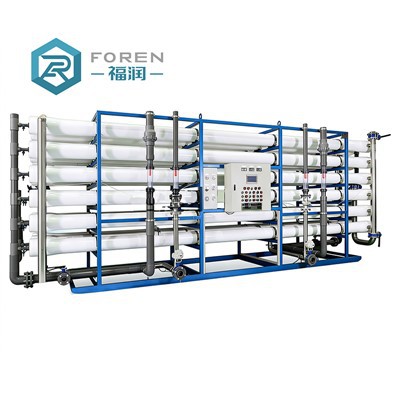
Volume is the easiest way to tell them apart, honestly. Domestic systems handle, like, 500 to 1,000 gallons a day—max. Think about how much water your household uses: drinking, cooking, showering, laundry, dishwashing. That adds up to a few hundred gallons, easy. So a home RO (reverse osmosis) system under your sink? It churns out maybe 50 gallons a day, tops. A whole-house softener? Maybe 1,000 gallons at a time, and it regenerates once every few days. Now industrial? We’re talking thousands to millions of gallons a day. A food processing plant making soda, for example, needs enough clean water for every liter of soda they bottle. A power plant uses water to cool turbines—they need millions of gallons nonstop. Industrial systems have big pipes, huge tanks, pumps that sound like they could lift a car. I once helped a mining company size a system that handled 2.5 million gallons a day—that’s not something you tuck under a kitchen counter.
Next up: contaminants they’re built to target. Domestic stuff mostly tackles the “nuisance” stuff first, plus stuff that’s unsafe for drinking. Think chlorine (that weird tap taste/ smell), lead from old pipes, small amounts of iron that makes your water look yellow, hard water minerals (calcium/magnesium) that leave scale. Home RO systems will take out 90%+ of those, and carbon filters handle chlorine like a champ. Industrial? They’ve got way longer list of bad guys to fight. Let’s take a textile factory, for example—they need water that’s super pure so dyes don’t come out uneven. So they have to get rid of heavy metals (like mercury or cadmium from raw materials), dissolved salts, even microplastics or industrial chemicals from runoff. A hospital might need water so pure it’s used for IV fluids—way stricter than drinking water. Industrial systems also have to handle process water vs. just drinking water. A brewery’s process water is for mashing grain, so it needs specific pH levels to make good beer, not just safe. That’s a whole other layer domestic systems don’t even think about.
Build quality and durability are night and day too. Domestic gear is made for light use, right? It’s built to last 5-10 years if you change the filters on schedule, but it’s not made to run 24/7, 365 days a year. I’ve seen a $300 home softener crack after 3 years because someone forgot to do regular maintenance. Industrial equipment? It’s built like a tank. Stainless steel tanks, heavy-duty pumps that don’t quit, corrosion-resistant parts because industrial water can be way harsher (more chemicals, higher mineral content). They’re made to run 10+ years with only scheduled, professional maintenance—no flipping a filter switch once a month, usually. And if a domestic system breaks? You might get a week of gross tap water until a repair guy comes. If an industrial system breaks? A food processing plant loses $10,000 an hour if they can’t make batches, a power plant could shut down and trigger blackouts. So industrial gear has redundant parts—like two pumps instead of one, so if one fails, the other kicks in immediately. Domestic systems don’t need backups like that.
Maintenance is another big difference, and it’s tied right to how much use they get. Domestic maintenance is straightforward—change your carbon filter every 6-12 months, replace RO membranes every 2-3 years, maybe add salt to a softener once a month. Even a whole-house system doesn’t take more than an hour or two to service, usually. Industrial? Maintenance is a full-time job, basically. They have daily checks, weekly tests for water quality, monthly parts replacements, and big annual overhauls. I worked with a potato processing plant last year that had a team of two full-time techs just for their water system—they had to test for bacteria every hour, clean filters twice a week, and adjust chemical levels constantly. If they skipped a check, they’d get E. coli in their process water and have to dump 10,000 pounds of potatoes. That’s not something a homeowner has to stress over.
Cost? Oh, you bet that’s a gap. Domestic systems are relatively cheap—you can get a whole-house softener for $1,000-$3,000, an under-sink RO for $200-$800. Even the fancy ones for big homes are under $5,000. Industrial? A basic system for a small factory starts at $50,000, and the big ones? We’re talking millions. The 2.5 million gallon a day mining system I mentioned earlier? That was $2.2 million. Why so much? Not just the parts—they’re custom-built. A home system is one-size-fits-most, but an industrial system is tailored to a business’s exact needs. A brewery needs different water than a textile mill, so we design every part specific to them. Also, the permits, installation, maintenance contracts—industrial has way more hoops to jump through, which adds cost.
Wait, but hold on—what about the gray area? There’s stuff in between, right? Like a small apartment building or a coffee shop with 20 employees. That’s not exactly domestic (it’s more than one household) but not full industrial. We call that “light commercial” water treatment, and it’s a middle ground. A coffee shop might have a system that handles a few thousand gallons a day, targets chlorine for espresso taste, and removes minerals so their machines don’t break. It’s built more like industrial, but smaller, with simpler maintenance. That’s a good middle spot, and I’ve helped a ton of small businesses pick that up instead of overpaying for full industrial.
Let me give you a quick real example to make this stick. Last year, a local café near my office called me panicking. They had a home-style RO system they bought online, and it was messing up their lattes—taste was off, and their $15,000 espresso machine was getting scale in 6 months. Turns out, that $500 home system only handled 50 gallons a day, but the café uses 300 gallons a day between coffee, pastries, and cleaning. It was overworked, so it couldn’t remove enough minerals. We swapped it for a light commercial system that handled 500 gallons a day, adjusted the pH for espresso, and used heavy-duty filters that lasted longer. Now their lattes are perfect, and the espresso machine is still running great. That’s exactly the kind of mix-up I see all the time—people grab domestic gear because it’s cheap, but it can’t handle their actual use.
So why does this matter to you, whether you’re a homeowner or a small business owner? If you’re a homeowner, don’t waste money on industrial equipment—you don’t need it, and it’s overkill, way too big, and impossible to maintain. If you’re a small business, don’t use domestic gear—it’ll break, cost you money in repairs and wasted product, and even hurt your reputation if your water’s bad. And if you’re somewhere in between? That middle commercial spot is where you want to be.
At the end of the day, the core goal is the same—clean, safe, usable water. But the scale, the demands, and the risks of failure make these two worlds totally separate. Domestic is for small, low-stakes use, simple maintenance, low cost. Industrial is for massive volumes, 24/7 operation, strict quality standards, and big consequences if it breaks.
If you’re trying to figure out which one you need—whether it’s for your home, restaurant, factory, or anything in between—hit me up to chat. I can walk you through your specific usage, what contaminants you’re dealing with, and what’ll work best (without selling you something you don’t need). No pressure, just straight answers—like I always do.
Stainless Steel Products References:
- Water Treatment & Purification Association (WTTA). (2022). Domestic vs. industrial water system design and performance standards. WTTA Technical Report Series.
- U.S. Environmental Protection Agency (EPA). (2021). Water treatment technology fact sheets: Residential and industrial applications. EPA Office of Water.
- Food and Agriculture Organization (FAO). (2020). Industrial water use and treatment requirements for agricultural and food processing sectors. FAO Water Reports.
- International Water Association (IWA). (2023). Durability and maintenance benchmarks for municipal and industrial water treatment equipment. IWA Journal of Water Supply: Research and Technology – Aqua.
- National Sanitation Foundation (NSF) International. (2022). Certification standards for domestic and commercial water treatment units. NSF/ANSI Standard 42, 53, and 61.
Qingzhou Foren Water Treatment Equipment Co., Ltd.
As one of the most professional water treatment equipment manufacturers and suppliers in China, we offer a wide range of products with superior quality. Please feel free to buy customized water treatment equipment made in China here from our factory. Contact us for quotation.
Address: No.999 Haidai North Road, Economic development Zone, Qingzhou City, Shandong Province
E-mail: alice@forenwater.com
WebSite: https://www.forenwater.com/
