Hey there! I’m a supplier of Box Way Turning Machine Centers, and today I wanna chat about the type of spindle drive in these bad boys. Box Way Turning Machine Center
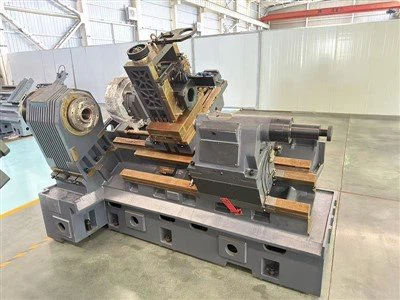
First off, let’s get a bit of background. Box way turning machine centers are pretty awesome pieces of equipment. They’re known for their stability and heavy – duty machining capabilities. The spindle drive is a crucial part of these machines as it directly affects how well the machine can perform its cutting tasks.
There are mainly two types of spindle drives commonly used in Box Way Turning Machine Centers: belt – driven spindles and direct – drive spindles.
Let’s start with belt – driven spindles. These are like the old – school workhorses of the spindle drive world. A belt – driven spindle uses a belt to transfer power from the motor to the spindle. It’s a simple and reliable system. One of the big advantages of belt – driven spindles is their ability to provide high torque at low speeds. This is super useful when you’re doing heavy cutting operations, like rough turning large diameter workpieces.
Imagine you’re machining a big chunk of steel. You need a lot of force to cut through it, right? Well, a belt – driven spindle can deliver that force because it can generate high torque. And the belt acts as a buffer between the motor and the spindle. If there’s a sudden increase in load, the belt can slip a bit instead of causing damage to the motor or other components.
Another plus is that belt – driven spindles are generally more affordable. They’re easier to install and maintain compared to some other types of spindle drives. You can replace the belt relatively easily if it wears out. And the belts are readily available in the market.
But it’s not all sunshine and rainbows. Belt – driven spindles have their limitations. The belts can stretch over time, which can lead to a loss of power transmission efficiency. You might need to tension the belts regularly to keep the system running smoothly. Also, they can’t achieve extremely high speeds as well as direct – drive spindles. At high speeds, the belts can vibrate, which can affect the precision of the machining.
Now, let’s talk about direct – drive spindles. These are the high – tech kids on the block. A direct – drive spindle connects the motor directly to the spindle, without the need for a belt. This design offers several important benefits.
One of the main advantages is speed. Direct – drive spindles can reach much higher rotational speeds compared to belt – driven spindles. This is great for applications where you need to do high – speed finishing operations. For example, if you’re making a precision part with a smooth surface finish, a high – speed direct – drive spindle can get the job done quickly and accurately.
Direct – drive spindles also offer better precision. Since there are no belts involved, there’s less backlash and vibration. The direct connection between the motor and the spindle ensures that the power is transferred more precisely, resulting in more accurate cuts. This is crucial for industries like aerospace and medical device manufacturing, where precision is everything.
Another benefit is the reduced maintenance. With no belts to replace or tension, the maintenance workload is significantly reduced. You don’t have to worry about belt wear and tear or belt – related failures.
However, direct – drive spindles do have their drawbacks. They’re more expensive than belt – driven spindles. The initial investment is pretty high. Also, they generate more heat because of the direct connection between the motor and the spindle. You need to have a good cooling system in place to prevent overheating, which adds to the cost of the machine. And if there’s a problem with the motor, it can be more difficult and costly to repair compared to a belt – driven system.
So, which one should you choose? Well, it depends on your specific needs. If you’re mainly doing heavy – duty rough machining and don’t need extremely high speeds, a belt – driven spindle might be the way to go. It’s cost – effective and can handle the high – torque requirements.
On the other hand, if you’re in an industry that demands high – speed precision machining, like high – end automotive or electronics manufacturing, a direct – drive spindle would be a better option. It can give you the speed and accuracy you need, even though it comes at a higher price.
As a Box Way Turning Machine Center supplier, I’ve seen different customers with different preferences. Some are more budget – conscious and go for the belt – driven spindles, while others are willing to invest more for the advanced features of direct – drive spindles.
If you’re in the market for a Box Way Turning Machine Center, I’d be happy to have a chat with you. We can discuss your machining needs, the type of spindle drive that would work best for you, and how we can customize a machine to fit your requirements. Whether you’re a small – scale workshop or a large – scale manufacturing plant, we’ve got solutions for you. So, don’t hesitate to reach out for a friendly chat and let’s see how we can make your machining operations more efficient and productive.
Drilling and tapping center References
- "Machining Technology Handbook"
- Various industry – specific trade magazines and publications on machine tools.
Smartech Machinery & Equipment Co., Ltd.
As one of the most professional box way turning center machine manufacturers and suppliers in China, we also support customized service. Please rest assured to buy bulk box way turning center machine made in China here from our factory. Contact us for more details.
Address: Room 2832, Changping Commercial Mansion, Shihua Road, Futian Free Trade Zone, Shenzhen, China
E-mail: smartech@smartechcnc.cn
WebSite: https://www.smartech-cnc.com/
