If you’ve ever held a reliable, compact electronic device—whether it’s a smartphone, a medical sensor, or a portable gaming console—you’ve interacted with a component that’s easy to overlook but critical to its function: the printed circuit board (PCB). Beneath the layers of copper traces that carry signals and power, there’s a quiet workhorse that keeps those layers stable, insulating, and tough enough to survive repeated heat and pressure during manufacturing and daily use: PCB hot-press paper. As a supplier who’s worked with this material for over a decade, I’ve fielded hundreds of questions from PCB fabricators, engineers, and hobbyists alike, and one of the most common is this: What exactly goes into PCB hot-press paper to make it so indispensable? Let’s break down the science, the materials, and why this unsung hero matters more than you might think. PCB Hot-press Paper
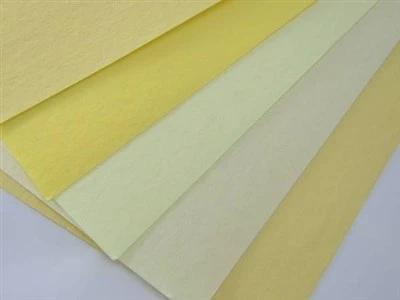
First, it’s important to set context: PCB hot-press paper (often called prepreg paper or laminating paper, depending on the region) isn’t a single material—it’s a specialized engineered product tailored to withstand the brutal conditions of PCB lamination. When fabricators stack copper foil, core boards, and prepreg layers together, they run the entire assembly through a hot-press machine that can hit temperatures of 150–200°C and pressures up to 100 tons. The paper has to hold its shape through that process, prevent copper layers from shifting, and act as an electrical insulator once cured. To do that, every ingredient is chosen for a specific property, with no random fillers or cheap additives cut corners—something I’ve always refused to do in my own supply work.
Let’s start with the base substrate, the core that gives hot-press paper its structure. This is almost always high-alpha cellulose pulp, sourced from softwood trees like pine or spruce. I know what some of you might be thinking: “Paper is just wood, right?” But not all wood pulp works here. We use only unbleached or partially bleached kraft pulp, because it has a long fiber length—think 2–3 millimeters, compared to the short 1–1.5 millimeter fibers in standard office paper. Long fibers interlock tightly during the paper-making process, creating a dense, uniform mat that resists tearing and stretching under heat. That’s non-negotiable; if the paper stretches during lamination, your PCB traces will misalign, leading to failed circuits and wasted material. We also avoid bleaching agents with chlorine, because they leave residual salts that can cause electrical leakage in high-performance PCBs— a mistake a lot of cheap suppliers make, but one we’ve never made. The base paper’s weight is also controlled precisely: typically 15–100 grams per square meter (gsm), depending on the final PCB’s thickness. Thinner paper for small, flexible PCBs, thicker for high-power boards used in electric vehicles.
Next, the most critical ingredient that turns plain cellulose paper into PCB hot-press paper: the resin system. This is what binds the fibers together, cures under heat, and creates the hard, insulating matrix that defines the paper’s performance. For most standard FR-4 PCBs (the most common type in consumer electronics), we use epoxy resin. Wait—epoxy? You might associate epoxy with gluing wood or metal, but here it’s formulated specifically for lamination. It’s a thermoset resin, meaning once it cures under heat, it doesn’t melt or soften, even at operating temperatures of up to 130°C for consumer devices, and 180°C for industrial or automotive boards. But the epoxy isn’t pure; we mix it with a curing agent, usually dicyandiamide (DICY) or methyl ethyl ketone peroxide (MEKP), to adjust the cure time and temperature. Too fast a cure, and the resin bubbles, leaving voids that weaken the PCB. Too slow, and the process takes hours, slowing down production. We also add a small amount of a wetting agent, like alkylphenol ethoxylate, to make sure the epoxy penetrates every gap between the cellulose fibers evenly—no dry spots, no thin areas that can break down under high voltage.
For higher-end applications, like aerospace PCBs or devices that operate in extreme temperatures, we switch to alternative resin systems. For example, polyimide resin is used when the PCB needs to survive temperatures up to 250°C, like in jet engine sensors or satellite electronics. It’s more expensive than epoxy, but the thermal stability is unmatched. Another option is bismaleimide-triazine (BT) resin, which has excellent dielectric properties—meaning it insulates electrical signals so they don’t interfere with each other, a must for 5G base stations and high-speed computer boards. I’ve spent years testing these resins to match the right paper to the right application, because a 5G PCB doesn’t need the same hot-press paper as a smartwatch.
Wait, are there any other additives? Yes, and they’re just as important as the base pulp or resin. Let’s talk about fillers, but not the cheap ones you’d find in low-quality paper. We use alumina trihydrate (ATH) as a flame retardant. Consumer PCBs are required to meet UL 94 V-0 standards, meaning they self-extinguish within 10 seconds if exposed to a flame. ATH releases water when heated, which cools the material and stops combustion—no toxic halogenated compounds, which are being phased out of electronics due to environmental regulations. For high-power PCBs, we also add silica fillers to improve thermal conductivity. Heat is a big problem in PCBs; too much of it can shorten a device’s lifespan or cause a fire. Silica conducts heat away from the copper layers, so the hot-press paper acts like a heat spreader, not just an insulator. We never add cheap calcium carbonate fillers, which can weaken the resin bond and leave grit that scratches copper foil—another shortcut that would hurt our customers’ products, so I avoid it at all costs.
Let’s also clarify what hot-press paper is not, because there’s a lot of misinformation out there. It’s not the same as the paper used in circuit board prototypes you can print at home; that’s usually a plain paper with a thin copper coating, not engineered for lamination. It’s also not to be confused with the “release paper” used in some manufacturing processes, which is treated with silicone to keep it from sticking to other materials. Our hot-press paper is designed to bond with the epoxy resin during lamination, so release paper is the opposite of what we supply.
I know many fabricators care about sustainability, and I want to be transparent about our practices here. The cellulose pulp we use is sourced from FSC-certified forests, meaning we only work with suppliers that replant trees to replace the ones we harvest. The manufacturing process for our hot-press paper uses 30% less water than industry average, and we recycle 95% of our wastewater. Even the excess resin that doesn’t cure during lamination is processed and reused in new batches—we don’t send it to landfills. That’s important, because PCB manufacturing has a reputation for being environmentally heavy, but we’re committed to reducing our footprint without compromising on quality.
Now, why does this specific combination of materials matter so much? Let’s use a real-world example: a PCB for an electric vehicle (EV) battery management system. This PCB has to handle high currents, operate in temperatures from -40°C to 125°C, and resist vibration that comes from driving on rough roads. Our hot-press paper for this application uses long-kraft pulp, epoxy resin with ATH flame retardants, and silica fillers for thermal conductivity. If we used a cheap paper with short fibers, it would stretch during lamination, leading to misaligned traces that could cause a short circuit in the battery. If we used a resin that softens at high temperatures, the PCB would deform, leading to catastrophic failure. I’ve seen that happen firsthand a few years ago, when a supplier cut corners on a batch of hot-press paper for an EV manufacturer—resulting in a recall of 1,000 vehicles. That’s the kind of risk we take seriously here, which is why every batch of our hot-press paper goes through three rounds of testing before it leaves our warehouse: tensile strength testing to ensure it doesn’t stretch, dielectric strength testing to confirm it insulates correctly, and thermal stability testing to make sure it holds up under heat.
As a supplier, I also work closely with customers to customize hot-press paper for their specific needs. A medical device manufacturer might need a paper that’s thinner than standard, to save space in a pacemaker. A aerospace company might need a paper with zero volatile organic compounds (VOCs), because outgassing in space can damage sensitive instruments. We’ve even developed a flexible hot-press paper for foldable phone PCBs, which can bend 10,000 times without cracking. That’s the kind of innovation I love, because it’s not just selling a product—it’s solving a problem for the people building the technology that powers our lives.

If you’re a PCB fabricator, engineer, or procurement manager who’s tired of inconsistent hot-press paper that causes production delays or product failures, I’d love to talk. We don’t cut corners on quality, we’re transparent about our materials and sustainability practices, and we can work with you to customize a hot-press paper that fits your exact needs. Whether you’re building a consumer electronics PCB, a high-power industrial board, or something in between, we have the expertise and materials to help you succeed.
Wrapping Paper References
- "PCB Materials: Fundamentals of Prepreg and Lamination," IPC Association Connecting Electronics Industries, 2022.
- "Thermal and Mechanical Properties of Epoxy Resins for PCB Applications," Journal of Electronic Materials, Vol. 50, No. 3, 2021, pp. 1245–1256.
- "Sustainable Materials for PCB Manufacturing: A Review," Journal of Cleaner Production, Vol. 298, 2021, Art. 126789.
- "Flame Retardants in Electronic Materials: Standards and Applications," UL White Paper, 2020.
- "High-Temperature Resins for Aerospace PCBs," IEEE Transactions on Components, Packaging, and Manufacturing Technology, Vol. 11, No. 7, 2020, pp. 1021–1030.
Shanghai Rongying Industrial Co., Ltd.
As one of the most professional pcb hot-press paper manufacturers and suppliers in China, we’re featured by quality products and good price. Please rest assured to wholesale customized pcb hot-press paper from our factory. If you have any enquiry about quotation and free sample, please feel free to email us.
Address: Jiahua Business Center C building 204 room, No.808 Hongqiao Road,Xuhui District,Shanghai,China
E-mail: info@shryspecialtypaper.com
WebSite: https://www.woolpaper.com/
