Hey there, fellow tractor owners and farm managers. If you’re the person responsible for keeping a medium tractor running through planting season, harvest, and everything in between, you know that nothing kills a workday faster than an unplanned breakdown. I’m Sam, and I’ve been part of the team here at [My Medium Tractor Supplier] for eight years—first as a service tech, and now I help walk new and existing customers through everything from initial setup to long-term care. I’ve seen tractors go 10,000 hours with only routine oil changes and a few minor part swaps, and I’ve seen others die young because their owners skipped a $20 filter change or didn’t check a single fluid level for six months. Today, I’m breaking down the maintenance schedule we recommend for our medium tractors, tailored specifically to how you use these machines—whether you’re pulling a mower, a baler, a grain cart, or a small tiller. This isn’t just a random list of tasks; it’s built on the thousands of hours our own service teams have logged working on these exact models, plus guidelines from the engine manufacturers we partner with. Let’s dive in. Medium Tractor

First, a quick note on what we call a “medium tractor” for this schedule. For our team, that’s any model from 75 to 150 horsepower, designed for small to mid-sized farms, acreage properties, and light commercial use. They’re versatile—you can switch between front-end loaders, hay tools, and landscaping attachments in an afternoon, which means they put different stresses on their parts depending on the job. That’s why the schedule isn’t one-size-fits-all: we split it into intervals based on hours of operation, because a tractor that runs 10 hours a day needs more frequent checks than one that sits idle most weekends. We also factor in “severe service” use—think constant dusty field work, operating in cold or muddy conditions, or running attachments that put extra strain on the transmission. If your tractor falls into that category, you’ll want to shorten most intervals by 25 to 50 percent; I’ll note that throughout.
Let’s start with the most frequent task, the one that’s non-negotiable for engine health: oil and filter changes. For our medium tractors operating in standard conditions, we recommend changing the engine oil and replacing the oil filter every 100 hours. Wait, I know some older guides say 200 hours, but modern diesel engines and synthetic oils change that. The tight tolerances in today’s common rail engines mean even tiny bits of debris from combustion can cause damage over time. If you’re running in severe service—say, baling hay in a dusty field all week, or plowing in damp, muddy soil—cut that to 75 hours. Why so often? I’ve seen a customer skip an oil change and end up with a clogged oil pump, which cost him $12,000 in engine replacement when he could’ve done the oil change for $80. That’s a no-brainer. Also, don’t forget the hydraulic fluid filter, if your tractor uses a combined engine and hydraulic system (most of our medium models do). For that, standard intervals are every 200 hours, and severe service gets you to 150. Hydraulic fluid is the lifeblood for your loader, steering, and any rear attachments—dirty fluid leads to stuck valves and slow operation long before you notice a leak.
Next, let’s move to fuel system maintenance, which is a pain point for so many tractor owners, especially in areas with high diesel or biodiesel content. The fuel filter is your first line of defense. We recommend changing the primary fuel filter every 200 hours, and the secondary (or inline) fuel filter every 400 hours, for standard use. If you’re using B20 biodiesel or operating in dusty conditions, bump primary to 150 hours and secondary to 300. Why two filters? The primary catches large water and debris, and the secondary filters out tiny particles that can damage fuel injectors—those are expensive to replace, often $500 each. Another fuel system tip: if you store your tractor for more than 30 days, add a fuel stabilizer to the tank before parking. I’ve had customers come back in spring to a full tank of diesel that’s turned to jelly because they skipped this step, and that’s a nightmare to flush out.
Every 400 hours is a big service interval—this is when you dig a little deeper, before small issues turn into big ones. First, the transmission fluid and filter. For our manual and power-shift transmissions in medium tractors, standard change interval is 400 hours, severe service is 300. Automatic transmissions? We bump that to 500 standard, 350 severe. Transmission fluid is designed to lubricate and cool the gears, so burnt or dirty fluid leads to slipping, hard shifting, or complete transmission failure. If you notice your loader lags when you lift heavy loads, or shifting between gears feels rough, that’s often a sign the transmission fluid is overdue for a change. Also at 400 hours: check the radiator and cooling system. Medium tractors work hard in hot weather, so a clogged radiator or old coolant can lead to overheating, which warps engine heads and kills power. Flush and replace the coolant every 2 years, regardless of hours, but for annual checks, test the coolant’s freeze point and pH level—rust in the cooling system is a silent killer. I also recommend checking all hoses and belts at this interval: the radiator hose, the alternator belt, the power steering hose. Cracks or bulges here mean you could be stranded mid-harvest. We’ve seen a hose burst on a customer’s tractor during corn picking, and he lost two full days of work waiting for a part. Don’t let that be you.
Then there’s the 800-hour interval, which is like a mid-life checkup for your tractor. This is when we recommend inspecting the clutch (if your model has a manual clutch) or the torque converter, depending on transmission type. Clutches in medium tractors should last 5,000 to 7,000 hours, but that’s only if they’re adjusted and lubricated properly at 800 hours. If you hear a squeal when you press the clutch, or it feels loose, don’t wait—adjust it now, before you burn out the friction plate. Also at 800 hours: inspect the front axle and wheel bearings. Medium tractors carry a lot of weight, especially when paired with a loader, so loose wheel bearings can cause uneven tire wear or even wobbling at speed. Pack the front bearings with high-temperature grease, and check the rear axle seals for leaks—hydraulic or gear oil leaks here will drip onto the ground and lead to low fluid levels quickly. Another task at 800 hours: the air filter. The engine air filter is often overlooked, especially in dusty areas. A clogged air filter reduces power and increases fuel use by up to 10 percent. We recommend checking it every 100 hours, and replacing it every 400 hours, but if you’re working in a very dusty field (like building a new hay field or plowing a fallow field), bump that to every 200 hours. Never blow out a paper air filter with compressed air— that damages the fibers, letting dust through. Tap it gently to remove loose dirt, or replace it if it’s heavily soiled.
Now, let’s talk about long-term maintenance, for intervals over 1,000 hours, and seasonal tasks that apply no matter how many hours you run. Every 1,000 hours, we recommend changing the differential and final drive fluid. These are the parts that transfer power from the transmission to the wheels, and the fluid here takes a lot of stress from heavy loads. Standard interval is 1,000 hours, severe service is 750. Also at 1,000 hours: inspect the brake system. Medium tractors used for loader work or transport need strong brakes. Check the brake pads (or shoes) for wear, adjust the brake linkage, and make sure the brake fluid is topped off and not contaminated. Never use car brake fluid here—tractor brake fluid is designed to handle higher temperatures from heavy use.
Seasonal tasks are just as important as hourly intervals, because they protect your tractor when it’s not running. If you live in a cold climate, before winter sets in, change the engine oil to a winter-grade oil (check your manual for the right viscosity), install block heater if your model has one, and drain any water from the fuel filter and water separator. If you store your tractor for more than a month, park it on a level surface, fill the fuel tank to prevent condensation, remove the battery and store it in a cool, dry place, and cover the tractor with a breathable tarp (not plastic, which traps moisture). In spring, before the busy season, do a full pre-use check: test all lights, signals, and the PTO (power take-off) to make sure it engages properly, inspect tire pressure (correct pressure is key for fuel efficiency and traction, especially when pulling heavy loads), and test all hydraulics for leaks or slow operation.
I want to be clear: this schedule is for our medium tractors, but the core principles apply to most models in the 75-150 horsepower range. The key is consistency. It’s easier to stick to a routine than to play catch-up when your tractor breaks down. I’ve talked to so many new farm owners who think “it ran fine last year, why fix it now?” and that’s the mistake. Your tractor is a big investment—most of our medium models cost $50,000 to $80,000, and the last thing you want is to lose months of productivity because of a preventable issue.
At [My Medium Tractor Supplier], we don’t just sell tractors—we back them up with service plans and guidance to keep them running. If you’re in the market for a new medium tractor, or you have questions about maintaining the one you already own, our team of service techs is available to walk you through this schedule, adjust it for your specific use case, and even offer flexible service packages that fit around your harvest or planting schedule. We also provide genuine parts that are built to last, unlike generic parts that can cause damage down the line.
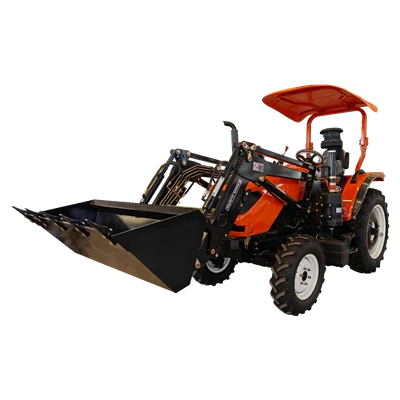
If you’d like to learn more about our medium tractor models, or discuss a maintenance plan that works for your farm, reach out to our team to schedule a consultation. We can answer all your questions, help you pick the right tractor for your needs, and make sure you’re set up to keep it running smoothly for thousands of hours to come.
Tillage Equipment References:
Tractor and Engine Manufacturers Association. Medium Tractor Maintenance Guidelines. 2022.
Caterpillar Inc. Common Rail Diesel Engine Care and Maintenance. 2021.
Deere & Company. Medium Tractor Severe Service Operation Guidelines. 2023.
National Agricultural Statistics Service. Farm Equipment Maintenance Best Practices. 2022.
Sevol International Trade (Shandong) Co., Ltd.
As one of the most professional medium tractor manufacturers and suppliers in China, we’re featured by quality products and good price. Please rest assured to buy advanced medium tractor for sale here from our factory. We also accept customized orders.
Address: 1210, Building 13, No. 13129, Yingqian Street, Liyuan Street, Kuiwen District, Weifang City, Shandong Province
E-mail: Savotrak@163.com
WebSite: https://www.sevol-global.com/
