Hey there! As a supplier of 4G LTE Poc (Push-to-Talk over Cellular) radios, I get asked a lot about the communication protocols these radios support. So, I thought I’d write this blog to break it down for you. 4G LTE Poc Radio
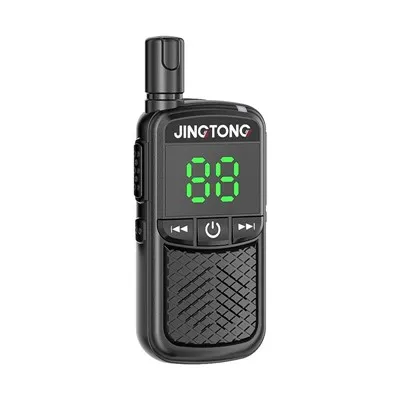
First off, let’s understand what 4G LTE Poc radios are. They’re basically two-way radios that use the 4G LTE cellular network to transmit voice and data. This means you can communicate over long distances without the need for a dedicated radio network. Pretty cool, right?
Now, let’s dive into the communication protocols.
SIP (Session Initiation Protocol)
SIP is one of the most common protocols used in 4G LTE Poc radios. It’s like the traffic cop of the communication world, managing how calls are set up, maintained, and terminated. When you press the push-to-talk button on your 4G LTE Poc radio, SIP gets to work. It sends a request to the network to establish a connection with the recipient. Once the connection is established, voice data can flow between the two radios.
The great thing about SIP is its flexibility. It can support different types of media, not just voice. You can use it to send text messages, images, or even video calls. This makes it a versatile choice for businesses that need to communicate in various ways.
RTP (Real-time Transport Protocol)
RTP goes hand in hand with SIP. While SIP takes care of setting up the call, RTP is responsible for actually transporting the voice data in real-time. It breaks the voice data into small packets and sends them over the network. At the receiving end, these packets are reassembled to recreate the original voice message.
One of the key features of RTP is its ability to handle timing and sequencing. It ensures that the packets arrive in the right order and at the right time, so you get clear and uninterrupted voice communication. This is crucial for applications where real-time communication is essential, like public safety or logistics.
RTCP (Real-time Transport Control Protocol)
RTCP is like the sidekick to RTP. It provides feedback about the quality of the RTP transmission. It monitors things like packet loss, delay, and jitter, and sends this information back to the sender. Based on this feedback, the sender can adjust the transmission parameters to improve the quality of the communication.
For example, if RTCP detects a high packet loss rate, the sender can reduce the bit rate of the voice data to make it more robust. This helps to ensure that the communication remains clear and reliable, even in challenging network conditions.
TCP (Transmission Control Protocol)
TCP is a well-known protocol that’s used for reliable data transmission over the internet. In the context of 4G LTE Poc radios, TCP can be used for sending non-real-time data, like text messages or configuration files.
The main advantage of TCP is its reliability. It uses a system of acknowledgments to ensure that all data packets are received correctly. If a packet is lost or corrupted, TCP will retransmit it until it’s received successfully. This makes it a good choice for applications where data integrity is important.
UDP (User Datagram Protocol)
UDP is the opposite of TCP in many ways. It’s a lightweight protocol that’s used for sending real-time data, like voice and video. Unlike TCP, UDP doesn’t provide any guarantees about the delivery of data packets. It just sends them out and hopes for the best.
The advantage of UDP is its speed. Since it doesn’t have to wait for acknowledgments, it can transmit data much faster than TCP. This makes it ideal for applications where low latency is crucial, like push-to-talk communication.
CoAP (Constrained Application Protocol)
CoAP is a relatively new protocol that’s designed for use in constrained environments, like IoT (Internet of Things) devices. In the context of 4G LTE Poc radios, CoAP can be used for sending small amounts of data, like sensor readings or status updates.
One of the key features of CoAP is its simplicity. It’s designed to be lightweight and easy to implement, which makes it a good choice for devices with limited resources. It also supports multicast communication, which means you can send a message to multiple devices at once.
MQTT (Message Queuing Telemetry Transport)
MQTT is another protocol that’s commonly used in IoT applications. It’s a publish-subscribe protocol, which means that devices can publish messages to a broker, and other devices can subscribe to those messages.
In the context of 4G LTE Poc radios, MQTT can be used for sending and receiving messages between different devices. For example, a supervisor can publish a message to a group of workers, and all the workers who are subscribed to that message will receive it.
Why These Protocols Matter
Now that we’ve covered the main communication protocols supported by 4G LTE Poc radios, you might be wondering why they matter. Well, these protocols are the building blocks of the communication system. They determine how your radio can communicate with other devices, and how reliable and efficient that communication will be.
For example, if you’re in a business that requires real-time communication, like a construction site or a transportation company, you’ll want to use protocols like RTP and UDP to ensure low latency and clear voice communication. On the other hand, if you need to send non-real-time data, like reports or configuration files, TCP might be a better choice.
Choosing the Right Protocol
As a supplier, I often get asked how to choose the right protocol for a specific application. The answer depends on several factors, including the type of data you need to transmit, the reliability requirements, and the network conditions.
If you’re not sure which protocol to choose, don’t worry. Our team of experts is here to help. We can analyze your requirements and recommend the best protocol for your needs. We can also provide training and support to ensure that you get the most out of your 4G LTE Poc radios.
Conclusion
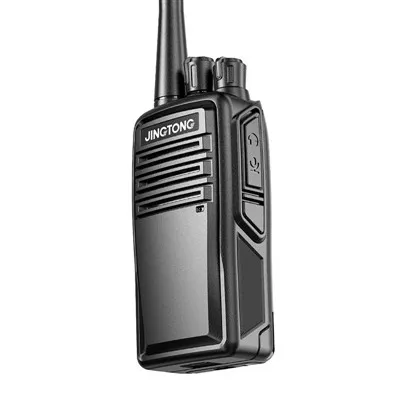
In conclusion, 4G LTE Poc radios support a wide range of communication protocols, each with its own strengths and weaknesses. By understanding these protocols, you can choose the right one for your application and ensure reliable and efficient communication.
10 Watt Walkie Talkie If you’re interested in learning more about our 4G LTE Poc radios or have any questions about the communication protocols, don’t hesitate to reach out. We’re always happy to have a chat and discuss how our products can meet your needs. Whether you’re a small business looking for a simple communication solution or a large enterprise with complex requirements, we’ve got you covered. Let’s start a conversation and see how we can work together to improve your communication systems.
References
- “SIP: Session Initiation Protocol” – RFC 3261
- “RTP: A Transport Protocol for Real-Time Applications” – RFC 3550
- “RTCP: A Transport Protocol for Real-Time Control” – RFC 3550
- “TCP: Transmission Control Protocol” – RFC 793
- “UDP: User Datagram Protocol” – RFC 768
- “CoAP: Constrained Application Protocol” – RFC 7252
- “MQTT: Message Queuing Telemetry Transport” – OASIS Standard
Jingtong (Quanzhou) Electronics Co., Ltd.
We are one of the most professional 4g lte poc radio manufacturers and suppliers in China, specialized in providing high quality customized service. We warmly welcome you to buy durable 4g lte poc radio made in China here from our factory. For price consultation, contact us.
Address: No.288, Si Huang Industry Zone, Xia Mei Town, Nan An, Quanzhou, Fujian province, China 362302
E-mail: jtdjj@jtdjj.com
WebSite: https://www.jteradio.com/
