Hey there! I’m a supplier of manual arbor presses, and I often get asked if these nifty tools can be used for pressing small plastic buttons. Well, let’s dive right into it and find out! Manual Arbor Press
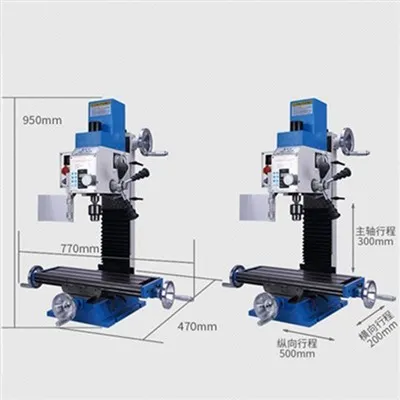
First off, let’s talk a bit about what a manual arbor press is. It’s a simple yet powerful device that uses a lever and a screw mechanism to apply force. You crank the handle, and the ram comes down, exerting pressure on whatever you’ve placed between the ram and the base. It’s been around for ages and is a staple in many workshops, from small hobbyist setups to larger industrial operations.
Now, when it comes to small plastic buttons, the short answer is yes, a manual arbor press can definitely be used for pressing them. But there are a few things you need to keep in mind to make sure the job gets done right.
Advantages of Using a Manual Arbor Press for Plastic Buttons
One of the biggest advantages is the control it gives you. With a manual press, you can apply just the right amount of force. Unlike some automated presses that might apply a set amount of pressure every time, you can feel how the button is reacting as you turn the handle. This is crucial when working with plastic because too much force can crack or deform the button, while too little might not get the job done.
Another plus is the cost. Manual arbor presses are generally much more affordable than their automated counterparts. If you’re a small business or a hobbyist making a limited number of plastic buttons, investing in a high – end automated press might not be worth it. A manual arbor press can do the job just fine without breaking the bank.
They’re also very versatile. You can use different types of dies with a manual arbor press. For plastic buttons, you can use custom – made dies to create the perfect shape and size. Whether you’re making round, square, or even custom – shaped buttons, you can find or make a die that fits your needs.
Considerations Before Pressing
Before you start pressing those plastic buttons, there are a few things you need to consider.
Plastic Type
Not all plastics are created equal. Some plastics are more brittle, while others are more flexible. For example, polystyrene is a relatively brittle plastic, and you need to be extra careful when applying pressure. On the other hand, polyethylene is more flexible and can withstand a bit more force. You need to know the type of plastic you’re working with so that you can adjust the pressure accordingly.
Button Design
The design of the button also matters. If the button has a complex shape or delicate features, you need to make sure the die is properly aligned and that the pressure is evenly distributed. A misaligned die can cause the button to deform or have uneven edges.
Die Quality
The quality of the die you use is crucial. A poorly made die can leave marks on the button or not create a clean cut. Make sure the die is made from high – quality materials and is precisely machined to the right dimensions.
Step – by – Step Guide to Pressing Plastic Buttons
Here’s a simple step – by – step guide on how to use a manual arbor press to press small plastic buttons:
Step 1: Prepare Your Materials
Gather your plastic sheets or blanks, the appropriate die, and your manual arbor press. Make sure the press is clean and in good working condition.
Step 2: Set Up the Die
Place the die on the base of the arbor press. Make sure it’s centered and secure. You might need to use clamps or other fixtures to hold the die in place.
Step 3: Position the Plastic
Carefully place the plastic sheet or blank on top of the die. Align it properly so that the button shape will be cut or formed in the right place.
Step 4: Apply Pressure
Slowly turn the handle of the arbor press to lower the ram. As you do this, you’ll start to feel the pressure building. Keep turning the handle until the button is fully formed or cut. Be careful not to apply too much pressure too quickly.
Step 5: Remove the Button
Once the pressing is done, carefully lift the ram and remove the button from the die. Check the button for any defects or rough edges.
Troubleshooting
Even if you follow all the steps, you might encounter some issues. Here are a few common problems and how to fix them:
Button Cracks
If the button cracks, it’s likely that you applied too much pressure. Try reducing the force you use when turning the handle. You can also try using a different type of plastic that is more flexible.
Uneven Edges
Uneven edges can be caused by a misaligned die or uneven pressure distribution. Check the alignment of the die and make sure it’s properly secured. You might also need to adjust the pressure so that it’s evenly applied across the button.
Button Sticks to the Die
If the button sticks to the die, you can try applying a small amount of lubricant to the die. This will make it easier to remove the button after pressing.
Conclusion
So, to sum it up, a manual arbor press is a great tool for pressing small plastic buttons. It offers control, affordability, and versatility. As long as you take into account the type of plastic, the button design, and the quality of the die, you can create high – quality plastic buttons with ease.
If you’re interested in getting a manual arbor press for your button – making project or any other pressing needs, I’d love to have a chat with you. Whether you’re a small – time crafter or a larger business, we’ve got the right press for you. Just reach out, and we can discuss your requirements and find the perfect solution.
Long Bed Wood Lathe References
- "Handbook of Plastic Materials and Technology" by Irvin I. Rubin
- "Machinery’s Handbook" by Industrial Press Inc.
YS Machine Tools Co., Ltd.
We’re well-known as one of the leading manual arbor press suppliers in China, featured by quality products and good service. Please rest assured to buy customized manual arbor press at competitive price from our factory. Contact us for more details.
Address: 300 Sandusky st, Ohio, 43611, USA
E-mail: yishoumachinetools@gmail.com
WebSite: https://www.ysmachinetool.com/
